
Archive | Dottings of a Paragrapher RSS feed for this section

A King’s reach: My father’s take on the Royals

26 Feb

When I suggested to my daughter, Zuri, that she would love the Oscar winning The King’s Speech and that it would be great for her to see it in London, where she is studying abroad, she revealed that her drama professors were not so keen on it. “They see it as propaganda for the monarchy.”
There is also a lot of buzz in the American and international press about the accuracy or inaccuracy of the film. Bertie’s stutter was not really that bad, Winston Churchill was not really that fat and  he was not so forcefully opposed to King Edward VIII‘s relationship with a twice-married Wallis Simpson. More seriously, some argue that throughout the late 1930s the royal family and much of the British establishment favored appeasement of Hitler’s regime.
My father was a bit of a gusher when it came to the Royals.

“A King Dies,” Ebenezer proclaimed in a column on Feb. 1, 1936. The far-flung British Empire, with its approximately 500,000,000 inhabitants of all colors mourns today! George the Fifth, its ‘Sailor King’ is dead! He passed away in his 71st year of life and in the 26th year of his reign. From far-off New Zealand and Australia to the Dominion of Canada, from India to the remote Falkland Islands and the West Indies, flags are at half-mast; bells have tolled, theatres closed, night clubs darkened — business had come to a standstill, all in reverence to a departed monarch, loved by his people, and of whose greatness historian will testify.”
But in true fashion, Ebenezer brought the king’s death back home to America.

King George V

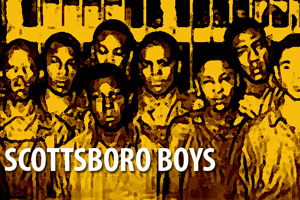
“The passing of the British monarch had its repercussion here in the House of Representatives when Speaker Byrns [Joseph W. Byrns, D-Tenn] put forward a resolution that the body adjourn out of respect to the dead king. Representative [Martin] Sweeney of Ohio was the dissenting voice. His objection was based on the grounds that his kin lost their lives during the time of the Blacks and Tans (Britain opposing the independence of the Irish Free State) and according to the New York Times Washington correspondent, Mr. Sweeney ‘is unwilling for the legislature of a democracy to honor the memory of a king in whose names the bullets went winging’  Speaker Byrns ignored Mr. Sweeney. Negroes might sympathize with Mr. Sweeney in the loss of his kin, but it is natural that they at the same time reflect on the atrocities which are committed under America’s ‘democracy” In the first place we have hundreds of lynchings which have taken place in the direction from which Mr. Sweeney hails and against which Congress up to its last session refused to enact legislation. Many a Negro has lost his innocent kin by these barbarous methods. The Fourteenth and Fifteenth amendments to the constitution as they apply to Negroes are openly violated in the South. Under the shadow of the Capitol’s dome, Negroes have been denied use of the House Restaurant and even in the North Negroes are systematically and occasionally discriminated against in government and private institutions. Lastly, we come to the persecution of the nine Scottsboro lads. Within the columns of the issue of the New York Times which voices Mr. Sweeney’s objection we read that the trial was being conducted for the fourth time amidst the most prejudiced atmosphere perhaps known to any court in a civilized country.”
As for the brief reign of Edward VIII and the Wallis Simpson scandal, my father initially had high hopes for the young king whom he described as a “super-salesman, athlete, flier, sportsman and one of the most socially beloved princes, whose magnetic personality was already evident. “

But upon Edward’s abdication, he was less charitable. “I still think Edward strayed somewhat from the ‘manor born.'” he wrote in a later column. He was born heir-apparent to a throne when the world respected it. He could easily have lived closer to its shadow.  Love intoxicates a man; marriage sobers him up, someone once said. And what if the inevitable hand of retribution moves to arouse Eddie from his intoxication, brought on by Wallis Simpson’s potion of third-rate ‘love!'”

My father was wrong about that love affair. Edward and Wallis stayed together until Edward, who became the Duke of Windsor after his abdication, died of cancer in 1972.


The black press: A beacon of light in the racial darkness

6 Feb

Credit: Library of Congress

If you plan to be in Pittsburgh between Feb. 11 and Oct. 2, check out “America’s Best Weekly: A Century of the Pittsburgh Courier,” which will be on exhibit at the Heinz History Center.  The Courier, where my father worked when I was a young girl in Pittsburgh, is celebrating 100 years of service to the black community.  In its heyday, the Courier had 400 employees and its readership spanned the country.  The Courier was a strong voice against segregation and particularly lynching. Pullman porters were enlisted to surreptitiously “drop” the papers along their Southern train routes.

“These papers were not welcomed in those states and oftentimes were confiscated and destroyed to keep African-Americans from reading newspapers,” Samuel Black, the exhibit’s curator, said in a recent interview with CBS Pittsburgh.

Robert Lavelle, an old family friend, who as a young man was responsible for coming up with those delivery routes,  was interviewed for The Black Press: Soldiers Without Swords, a film by award-winning  filmmaker  Stanley Nelson.  Lavelle said that even though Pittsburgh was a relatively small city, the Courier had a name well beyond its borders  “because it had tried to reach out to black people, no matter where they were, and we would try to send papers to those people. And as the people in those places became more numerous in terms of circulation, then those people would get a column in the Courier and maybe even on the front page of the Courier,  and pretty soon that place had an edition of the Courier. So the Courier developed 13 editions and we would send papers to these various,  regional places like the Midwest edition, the New England edition, the Chicago edition, the Philadelphia edition, and the Southern edition  . . .  We’d send them down by seaboard airline, Atlantic coastline railroad, down through Florida and all those places.”

My cousin Russell Williams

On a personal note, my cousin Russell Williams recalls a visit his family made to Pittsburgh:
“Back in 1958, as my father finished his Ph.D. at Michigan State, we traveled back to South Carolina (where he taught at SC State), and we stopped in Pittsburgh to see Ebenezer and Mary Ray and their three daughters (Mary was my father’s favorite cousin).  I remember Ebenezer taking us to the Pittsburgh Courier offices to show us how a newspaper was produced, and I carried home with me a souvenir (a piece of type) from that trip — a very interesting keepsake to my just-turned-seven-years-old
mind.  Years later, I came to understand the important role that the Courier played nationally, and was very proud that I had a relative who had contributed to that impact.”

As I was four years old at the time and have no recollection of that visit, I was moved by Russell’s  story.

Well before my father moved to Pittsburgh and joined the Courier, he tipped his hat to the Negro press as well. In 1935, the New York Age celebrated its 50th anniversary.


New York Age Nov. 2, 1935

“For fifty years, The Age has lived; for fifty years it has been an articulate voice of the Negro race; for fifty years it has weathered economic storms; for that period it has outlived its own shortcomings, and the shortcomings of the people it set out to serve,” Ebenezer wrote in a column published Nov. 2, 1935. “On the threshold of its new era, it is natural that it pauses to look back on its past on the path it has tread, a path strewn with pitfalls, a path decorated with the glory of achievement; a path nonetheless dotted with journalistic wrecks. Much of the paper’s success must be measured in the friends it has made; much of its power can be measured in the enemies it has made. No man can get very far without creating a few enemies here and there. The man whom everyone loves is insincere. The Age‘s supporters flaunt its greatness; to many it is a beacon [of] light in this — their world of racial darkness.”

Send the Rockefellers, Fords and Mellons to war first

8 Jan

It’s an age-old argument:

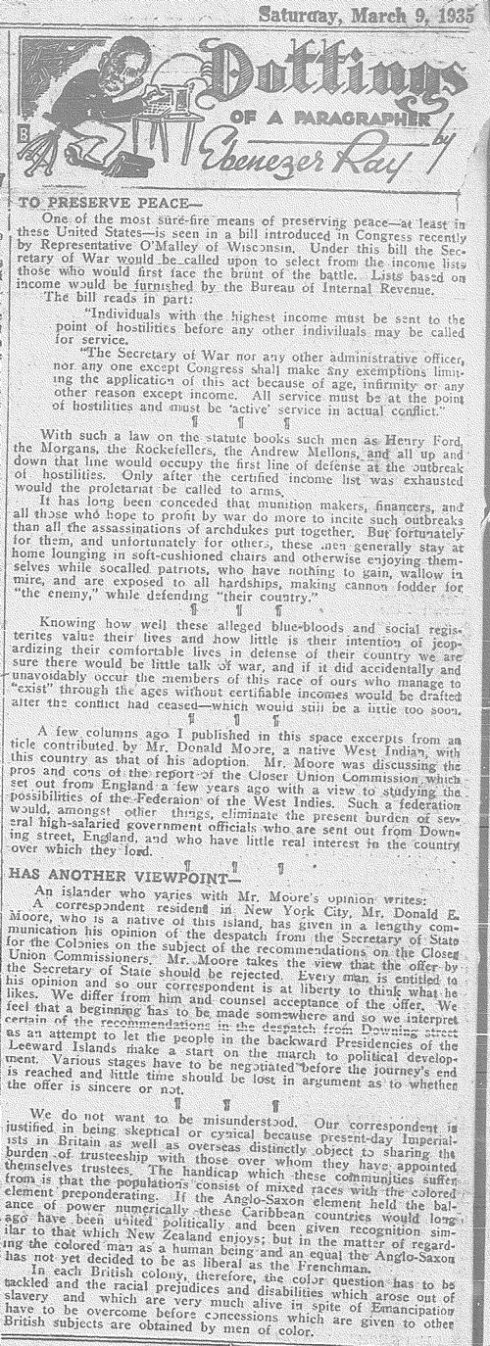
In his March 9, 1935 “Dottings” column, Ebenezer wrote about legislation forwarded by Wisconsin Democratic Congressman Thomas O’Malley, calling for the wealthy to be drafted for the U.S. military first.

“Individuals with the highest income must be sent to the point of hostilities before any other individuals called to service,” the bill read.

The only other reference I could find on this legislation was in a book titled Wealth, War & Wisdom by Barton Biggs.

Ebenezer wrote: “It has long been conceded that munition makers, financers, and all those who hope to profit by war do more to incite such outbreaks than all the assassinations of archdukes put together. But fortunately for them, and unfortunately for others, these men generally stay at home lounging in soft-cushioned chairs and otherwise enjoying themselves while so-called patriots, who have nothing to gain, wallow in mire and are exposed to all hardships, making cannon fodder for ‘the enemy,’ while defending ‘their country.'”

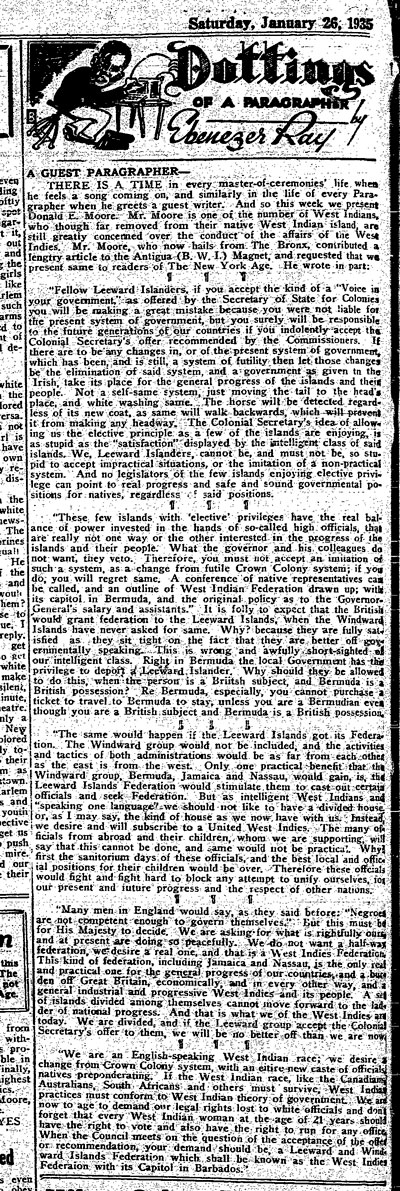
In the latter half of the column Ebenezer offers a counter argument to fellow West Indian writer Donald Moore, whom my father quoted extensively in his “Dottings” column on Jan. 26 of that year.  The column examined the recommendations of what was called the Closer Union Commission, which was considering a West Indian Federation.

“Such a federation, amongst other things, would eliminate the present burden of several high-salaried government officials who are sent out from Downing Street, England and have little interest in the country over which they lord,” Ebenezer wrote.

“We do not want to be misunderstood.  Our correspondent is justified in being skeptical or cynical because present day Imperialists in Britain as well as overseas distinctly object to sharing the burden of trusteeship with those over whom they have appointed themselves trustees. . .  In each British colony, therefore, the color question has to be tackled and the racial prejudices and  disabilities which arose out of slavery and which are very much alive in spite of Emancipation have to be overcome before concessions which are given to other British subjects are obtained by men of color.”

Guest column: The Closer Union Federation

8 Jan

Ebenezer offers his space to colleague Donald Moore. You’ll see in the “Dottings” column March 9, 1935, that Ebenezer offers his own take on the Closer Union Federation. If there are to be any changes in or of the present system of government which has been, and is still, a system of futility,” Moore wrote, “then let those changes be the elimination of said system and a government as given to the Irish, take its place for the general progress of the islands and their people.”

The New York Age, January 26, 1935

A road map for a new year

1 Jan

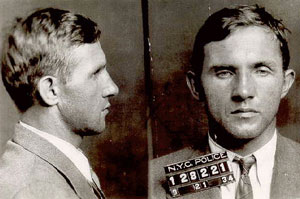
Bruno Hauptmann

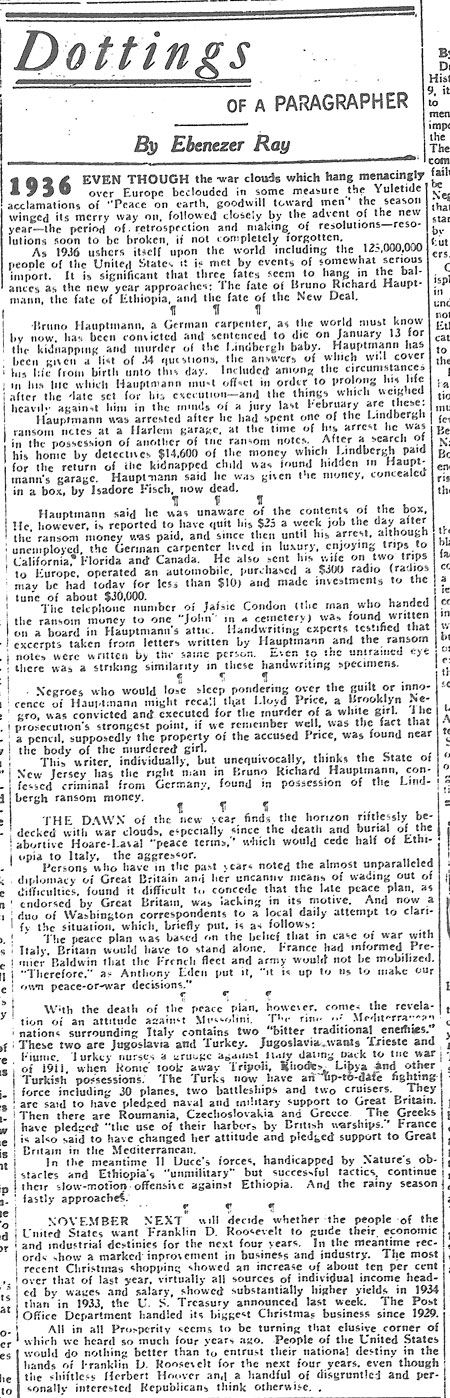
As the world welcomed 1936, the Lindbergh kidnapping case continued to capture the world’s attention.
“This writer individually but unequivocally thinks the State of New Jersey has the right man in Bruno Richard Hauptmann,” Ebenezer  wrote. He compared the Hauptmann matter with the case of Lloyd Price, a “Brooklyn Negro” who was “convicted and executed for the murder of a white girl. The prosecution’s strongest point, if we remember well, was  the fact that a pencil, supposedly the property of the accused Price, was found near the body of the murdered girl.”
My father also weighed in on Ethiopia, a recurring theme of his in 1935 and 1936, as well as FDR’s fitness for another four years:
“November next will decide whether the people of the United States want Franklin D. Roosevelt to guide their economic and industrial destinies for the next four years. In the meantime, records show a marked improvement in business and industry. the most recent Christmas shopping showed an increase of about ten per cent over that of last year, virtually all sources of individual income headed by wages and salary showed substantially higher yields n 1934 than in 1933, the U.S. Treasury announced last week. The Post office Department handled its biggest Christmas business since 1929. All in all, Prosperity seems to be turning that elusive corner of which we heard so much four years ago. People of the United States would do nothing better than to entrust their national destiny in the hands of Franklin D. Roosevelt for the next four years, even though the shiftless Herbert Hoover and a handful of disgruntled and personally interested Republicans think otherwise.”

The New York Age, January 4, 1936