I was on a Civil Rights tour and wrote this essay. My trip coincided with President Joseph Biden’s signing the Antilynching Act into law and came on the heels of the Will Smith Oscar slap. The Boston Globe published it on April 1.
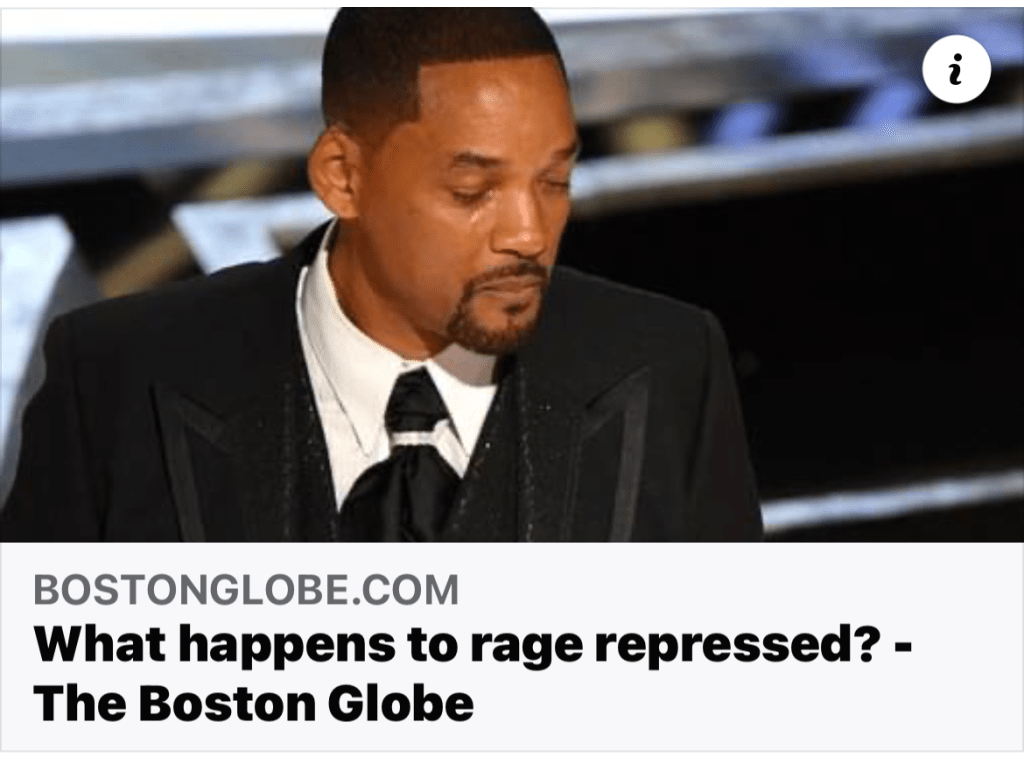
I was on a Civil Rights tour and wrote this essay. My trip coincided with President Joseph Biden’s signing the Antilynching Act into law and came on the heels of the Will Smith Oscar slap. The Boston Globe published it on April 1.

In the months leading up to a tour titled “On the Road to Freedom: Understanding the Civil Rights Movement,” I was on the fence. Despite the waning Covid infection numbers, the easing of mask mandates and the fact that my fellow travelers would all be fully vaccinated and boostered, I wasn’t sure. After all, we were traveling by bus through Alabama, Arkansas, Mississippi and Tennessee, states with lower vaccination rates than California. I’d managed to dodge the Covid bullet for two years. Was I ready to let my guard down?
I like to think of myself as an intrepid traveler, but the thought of navigating airports and ground transportation, all in an N 95 mask, gave me pause. Still, I was intrigued by the idea of a trip to U.S. historical sites I’d only read about.
In the end, I decided to go for it. After all, I told myself, you’re not getting any younger.
What occurred to me once the trip began, was that the people we would meet, foot soldiers who had been on the front lines of the movement, weren’t getting any younger either. As I note in my op-ed, “What Happens to Rage Repressed?” published in The Boston Globe on April 1, I got to meet Elizabeth Eckford, one of the Little Rock Nine. But she was just one of the treasures who shared their time and wisdom with us.

There was Hezekiah Watkins, who describes himself as Mississippi’s youngest Freedom Rider. His first arrest and incarceration at 13 years old is a harrowing tale.
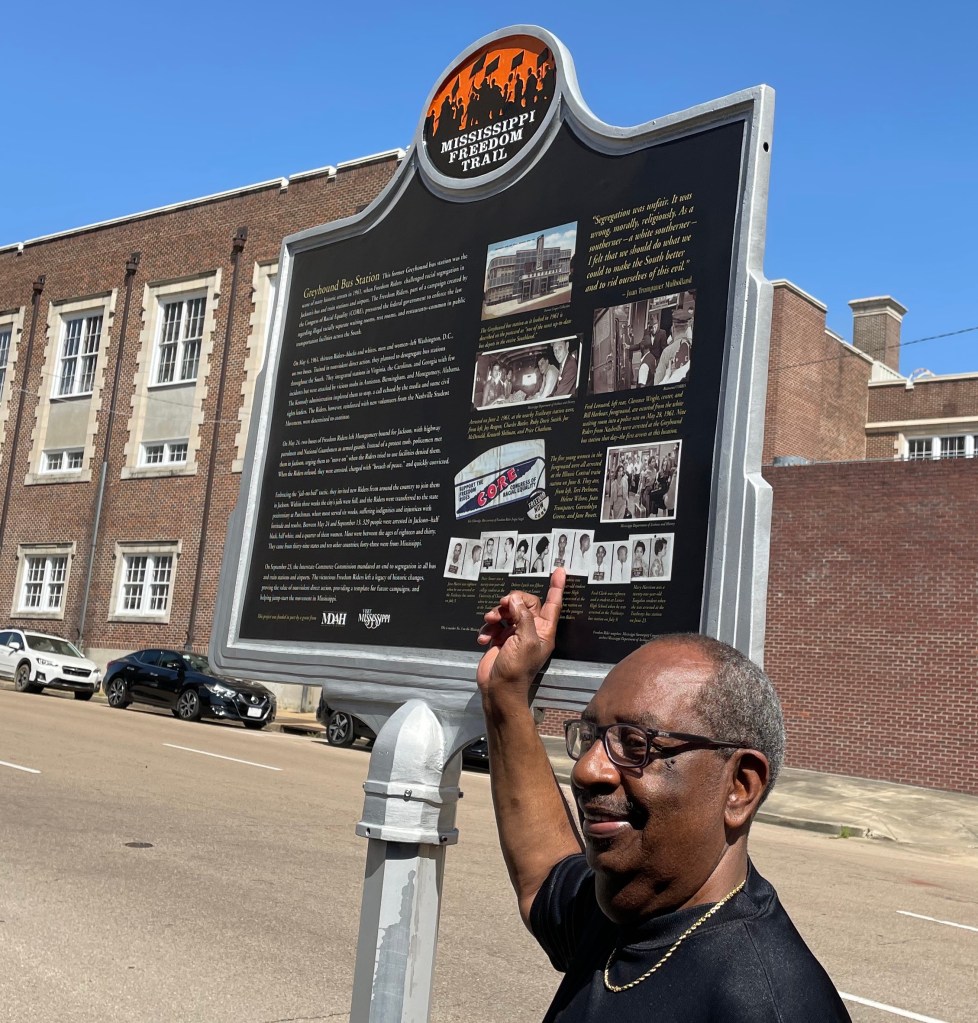
We spent several hours with Rev. Carolyn McKinstry as she recounted how at 15 years old she was handling Sunday School paperwork at 16th Street Baptist Church in Birmingham, Alabama, when the Ku Klux Klan set off the blast that killed four of her friends, injured others and terrorized the Black community.

We visited the Montgomery, Alabama, home of Dr. Valda Harris Montgomery, which was down the block from the parsonage of Dexter Avenue Baptist Church, where Rev. Dr. Martin Luther King, Jr. served as pastor from 1954 to 1960. Dr. Harris told heartwarming stories of the two families socializing in each other’s homes and how her own home was a sanctuary and a strategizing space for civil rights activists.
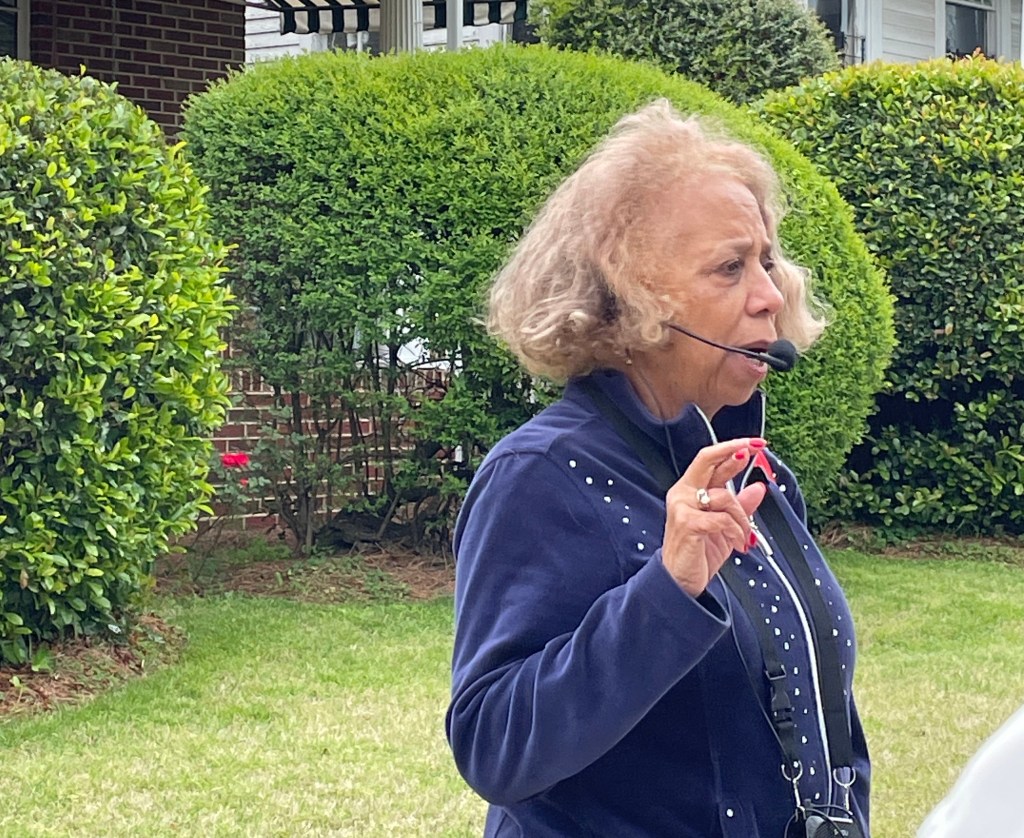
The tour, sponsored by the Commonwealth Club of California, included time to take in good music and enjoy delicious food. The state-of-the-art interactive museums that document the history of the African diaspora alone were worth the trip. Still, it was the living monuments to this history that I will remember the most.

My short story, “The Donna Collection” is included in the new anthology 166 Palms 2020. Buy the anthology on Amazon.

Today would have been Mary Ray’s 100th birthday. Wish she could be here to celebrate with us and to see all the thriving going on among her children, grandchildren and great grands.
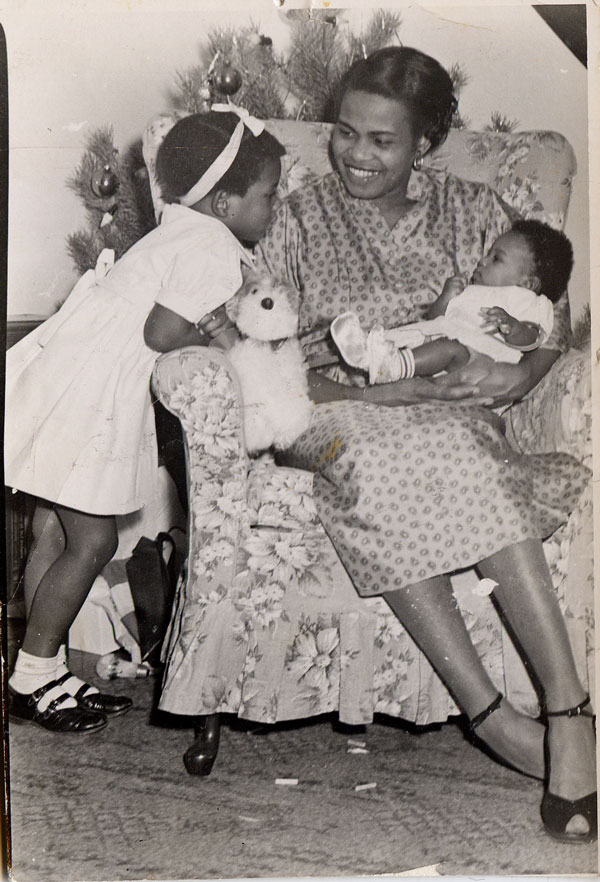
Ellen-Marie, Mom and me
Both of my parents were lovers of the arts, from the symphony to the cinema, from backyard talent shows to Broadway. Our family is filled with people with artists’ souls. I think often of my mother’s brother James Browne who worked as a custodian by day and sang with the North Jersey Philharmonic Glee Club for more than five decades, wowing audiences with his rich baritone. Then there are the dancers, actors, jewelry designers in the Ray, Rucker, Williams, Brooks, Alladice clan that just keep coming.
Tonight at 8 p.m., Zuri Adele will make her major TV debut in Good Trouble on the Freeform network. She plays Malika, an activist who is going to stir up trouble in the best sense.
The show’s title is inspired by Rep. John Lewis who has said: “I want to see young people in America feel the spirit of the 1960s and find a way to get in the way. To find a way to get in trouble. Good trouble, necessary trouble.”
As with The Fosters, of which Good Trouble is a spinoff, the show will deal with issues that we have been confronting since before the 60s — racial justice, police brutality, immigration, women’s rights and LGBTQ issues. The characters in the show have their own contemporary approaches to fighting injustice, using tools that were not available in the 60s, such as crowd sourcing and social media.
They also get into other kinds of trouble as well. And that’s real.
The first episode dropped on Hulu and Xfinity last week and will air on Tuesdays on Freeform at 8 p.m. Eastern and Pacific Time. (Check your local listings.)
https://www.instagram.com/p/BsJDJggFR-U/?utm_source=ig_web_button_share_sheet


Looking for something fresh to write about on Election Day, I searched my father’s columns for wisdom from the past. A footnote in a column published in the New York Age on November 3, 1934, implored readers to elect “Mrs. Eunice Carter” to the New York State Assembly. The name had a familiar ring. Five […]

My barber called Kamala Harris a “ho.” The shop I go to is not the stuff of Black culture lore. It’s not a boisterous place. It doesn’t reek with toxic masculinity. It’s a nice, quiet, family friendly kind of enterprise. The worst I have been subjected to in the nearly three years I’ve gone there […]

On Saturday, Feb. 17, I will be among several individuals inducted into the 2024 Class of the Black Legends of Silicon Valley. This is quite an honor. Previous recipients in the News and Documentary category in which I am being honored include journalists with stellar credentials. Loretta Green, an award-winning reporter for several local papers […]

My short story, “The Donna Collection” is included in the new anthology 166 Palms 2020. Buy the anthology on Amazon.

Blown away and humbled. The first piece of fiction I’ve ever gotten published wins an award. The story is published here.

 My Father's Posts