 Last Monday, when I found myself having trouble getting out of bed, I just assumed it was the winter pall, or maybe the martinis I had consumed over the President’s Day weekend. But as much as I was inclined to, as Jamie Foxx sings, “blame it on the alcohol,” (By the way, did anyone see the Glee take on that song last week?) It was something more profound.
On Thursday, while I was visiting the local Family History Center searching for more pieces of the Ray family puzzle, I came upon my mother’s death record. Yep. Feb. 21, 2002. Nine years ago last Monday.
I thought about waiting until next year to pay tribute. It will be the 10th anniversary of her death, a milestone of sorts. But the future is not promised, as we all know, so I’m going to do it now. After all, there is no end to the gifts my mother poured into me. I’m sure I’ll have plenty to say next year.
I dug out an article I wrote for Essence in 1986 titled “How to get out of that rut and make life an adventure.” I used my mother as an example of someone who did that every day.
 “My mother has always had a positive, energetic spirit and a sense of adventure unmatched in anyone else I’ve ever known,” I wrote in that Essence article. “A firm believer in going for the gusto, she ran track without the benefit of Wilma Rudolph as a role model. She was the first in her immediate family to earn a college degree. And while many of her peers were settling down with their own families, she was relocating to a strange city to take a new job. When she did marry and had my sisters and me, her world and her adventurous spirit simply grew. ‘There is no excuse for boredom,’ she’d say as she dragged us (and any other neighborhood child who happened to be within her reach) to dance classes, music lessons, museums, concerts, libraries and amusement parks — all on public transportation. And as my sisters and I came of age and began moving around to new jobs, new cities, new countries and new adventures, she was always there with her motherly caution, ‘Please be careful,’ and ‘Get some rest,’ — all the while saying ‘Go head, girl!'”
And I know she’s saying it now: To her daughter Malaya, who is still dancing, teaching and storytelling with a passion; To her granddaughter, M’Balia, who is about to get her degree all while working full time and raising three children and getting them through school and college. She’d say it to my daughter, Zuri, who is getting her acting on in London and will be an intern at the Cannes Film Festival in May. She’d say it to her granddaughter Kamaya, who has taken her big brother Jeremy, under her wing as he has determined to turn his life around. And, of course, she would say “well done” to her famous nephew Lamman, not just for his accomplishments as an actor, but for being a man with such a good, good heart.
My mom died on February 21, 2002 at 82. The weekend before, she had attended an AKA luncheon and the symphony. She was so active that when her friends didn’t hear from her in one 36-hour period, they knew something was up. They found her sitting in a comfy chair with her feet up, a cup of tea within reach.
She lived life fully to the end. That’s the best legacy she could leave.
The legacy of Mary Ray
26 Feb
Rethinking my parents’ marriage
11 Feb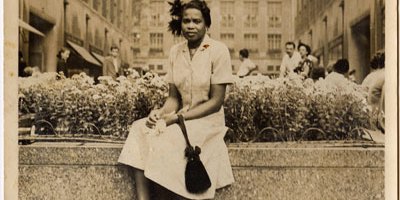

My parents’ wedding certificate
Finding my father’s columns has got me thinking a lot about my parents’ marriage. To be honest, I always thought my mother had been robbed. She was an independent woman, had a career as a social worker. She’d worked her way through junior college, then through Morgan State – the first in her nuclear family to graduate from college. She also was the only one of her siblings who moved beyond Newark/New York area to Pittsburgh. Marriage and babies were the farthest thing from her mind, she one said.
 Then she fell in love. And in my mind, that is where it all started to go bad. My mother gave up her career when they started a family. The way she told it, my father told her when she was pregnant with my sister Ellen-Marie, that if she did not quit her job he would go to the YWCA and “quit it for her.” He took his responsibility as a breadwinner seriously.
The only thing was, once Parkinson’s Disease rendered him unable to work, she had to figure out how to make a living. She was mother to my sisters and me; a substitute teacher in some of the most unruly classrooms in the city; and private duty nurse to my father. 24/7. She didn’t complain much, but it looked hard.
I often wondered what she saw in my father who by then seemed an old, sick  unhappy man.
Now I know. The man she met and fell in love with was gentleman with an agile mind, a worldly perspective, a love of language, politics and culture and maybe some New York property. A man who had traveled from Barbados, which must have seemed an exotic land, to a New York soon to be in the throes of the Harlem Renaissance. I imagine he wooed her with his stories. He must have been smitten by her spunk and beauty.
I haven’t found many photos of them together. As my mother wrote on the back of this photo he took of her in Rockefeller Center, he was a “camera bug.”
“I was vexed with him. We’d been walking all over New York it seemed. I had on high heels and dressed in my best seersucker suit. Note the gloves and hat. Persons were properly dressed then (smile.) Believe it or not, I was about 26 or 27, well before Ellen was born.”
What a gift to have this memory.
Happy Valentine’s Day.
The black press: A beacon of light in the racial darkness
6 Feb
Credit: Library of Congress
If you plan to be in Pittsburgh between Feb. 11 and Oct. 2, check out “America’s Best Weekly: A Century of the Pittsburgh Courier,” which will be on exhibit at the Heinz History Center. The Courier, where my father worked when I was a young girl in Pittsburgh, is celebrating 100 years of service to the black community. In its heyday, the Courier had 400 employees and its readership spanned the country. The Courier was a strong voice against segregation and particularly lynching. Pullman porters were enlisted to surreptitiously “drop” the papers along their Southern train routes.
“These papers were not welcomed in those states and oftentimes were confiscated and destroyed to keep African-Americans from reading newspapers,” Samuel Black, the exhibit’s curator, said in a recent interview with CBS Pittsburgh.
Robert Lavelle, an old family friend, who as a young man was responsible for coming up with those delivery routes, was interviewed for The Black Press: Soldiers Without Swords, a film by award-winning filmmaker Stanley Nelson. Lavelle said that even though Pittsburgh was a relatively small city, the Courier had a name well beyond its borders “because it had tried to reach out to black people, no matter where they were, and we would try to send papers to those people. And as the people in those places became more numerous in terms of circulation, then those people would get a column in the Courier and maybe even on the front page of the Courier, and pretty soon that place had an edition of the Courier. So the Courier developed 13 editions and we would send papers to these various, regional places like the Midwest edition, the New England edition, the Chicago edition, the Philadelphia edition, and the Southern edition . . . We’d send them down by seaboard airline, Atlantic coastline railroad, down through Florida and all those places.”
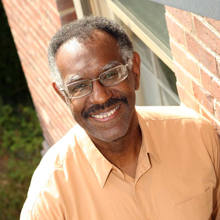
My cousin Russell Williams
On a personal note, my cousin Russell Williams recalls a visit his family made to Pittsburgh:
“Back in 1958, as my father finished his Ph.D. at Michigan State, we traveled back to South Carolina (where he taught at SC State), and we stopped in Pittsburgh to see Ebenezer and Mary Ray and their three daughters (Mary was my father’s favorite cousin). I remember Ebenezer taking us to the Pittsburgh Courier offices to show us how a newspaper was produced, and I carried home with me a souvenir (a piece of type) from that trip — a very interesting keepsake to my just-turned-seven-years-old
mind. Years later, I came to understand the important role that the Courier played nationally, and was very proud that I had a relative who had contributed to that impact.”
As I was four years old at the time and have no recollection of that visit, I was moved by Russell’s story.
Well before my father moved to Pittsburgh and joined the Courier, he tipped his hat to the Negro press as well. In 1935, the New York Age celebrated its 50th anniversary.

New York Age Nov. 2, 1935
“For fifty years, The Age has lived; for fifty years it has been an articulate voice of the Negro race; for fifty years it has weathered economic storms; for that period it has outlived its own shortcomings, and the shortcomings of the people it set out to serve,” Ebenezer wrote in a column published Nov. 2, 1935. “On the threshold of its new era, it is natural that it pauses to look back on its past on the path it has tread, a path strewn with pitfalls, a path decorated with the glory of achievement; a path nonetheless dotted with journalistic wrecks. Much of the paper’s success must be measured in the friends it has made; much of its power can be measured in the enemies it has made. No man can get very far without creating a few enemies here and there. The man whom everyone loves is insincere. The Age‘s supporters flaunt its greatness; to many it is a beacon [of] light in this — their world of racial darkness.”
‘Lady Lorraine’: Mystery solved
31 Jan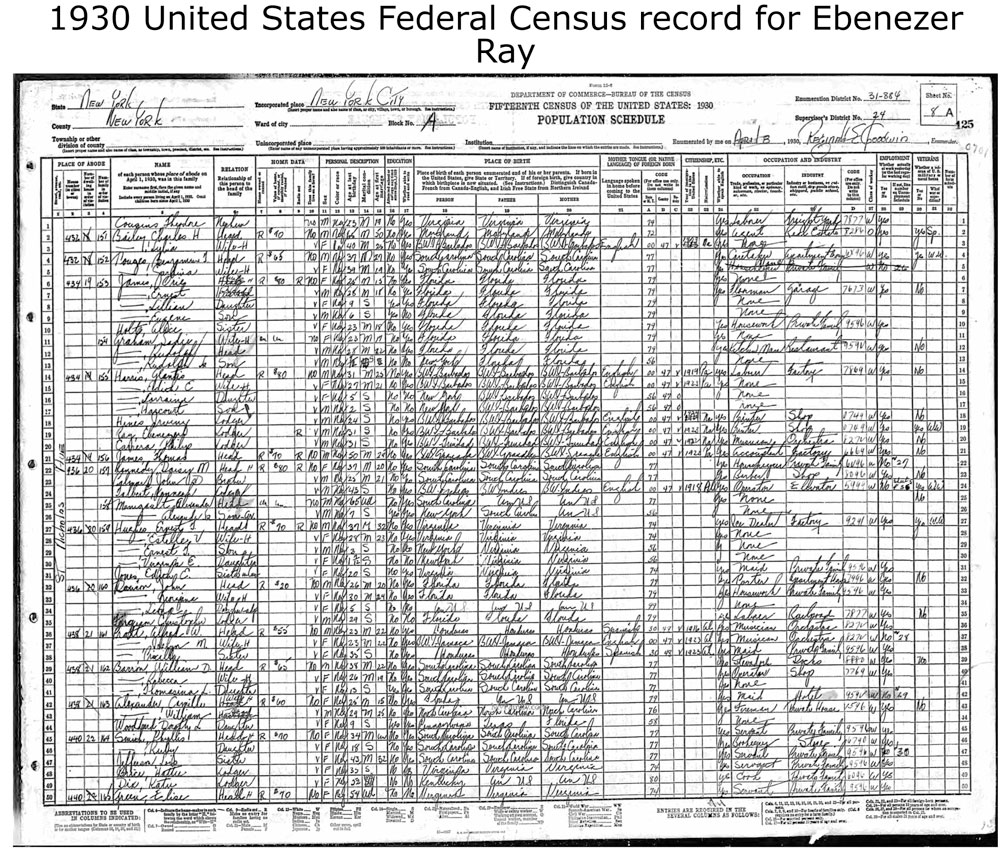 In a column my father published Feb. 10, 1934, he devotes the last paragraph to a young girl he refers to as “Lady Lorraine.” In honor of her ninth birthday, Ebenezer waxed on about her “ladylike qualities,” her accomplishments in the classroom and her big feet. He wrote that she “threatens to outGarbo Garbo’s legendary feet.” How rude, particularly considering that Lorraine was his landlord’s daughter.
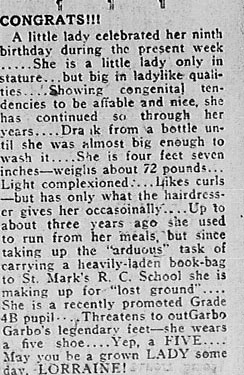 Initially, when I posted that column, I was rather curious about who Lorraine was and whether she was some long lost half-sibling. Then I remembered that the 1930 Census record I found a few months ago lists my father as a “lodger” in the home of Glantis Harris, his wife, Edith, son Harcourt and daughter Lorraine. She was five at the time of the Census, so turning nine four years later makes it all add up.
They lived at 434 St. Nicholas Ave. in New York. The rent for the entire place — I assume it was an apartment since there were other families listed at that address — was $80! In addition to my father, the other lodgers included Irving Hines, also a printer from Barbados, and a Philip Carrera, who is listed as a musician from Trinidad.
(By the way: He would later marry a woman who sported a size 11 shoe, and two of his three daughters — not including yours truly — had feet like their mother.)
Celebrating Black History
30 Jan One of the added treats of finding these columns of my father has been taking note of the other writers and scholars with whom he shared space in the New York Age: Black conservative George Schuyler and his wife Josephine Schuyler; Arthur Schomburg, after whom the Schomburg Library for Research in Black Culture is named (Back then Schomburg, who was of Puerto Rican origin, went by “Arturo”);
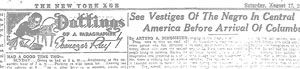 and historian, author and educator Carter G. Woodson. Woodson founded Black History Week, which was scheduled for the second week of February, bracketed by the birthdays of Frederick Douglass and Abraham Lincoln. (According to Woodson, Douglass, who was born into slavery, did not know his actual birthday, but chose Valentine’s Day. Black History Week is, of course, the precursor of Black History Month, which we begin celebrating Tuesday. According to Wikipedia, “The expansion of Black History Week to Black History Month was first proposed by the leaders of the Black United Students at Kent State University [my graduate school alma mater] in February 1969. The first celebration of the Black History Month took place at Kent State one year later, in February 1970.”
 Woodson also founded the Association for the Study of Negro Life and History, an organization that was founded in 1915 and still exists today. He wrote more than a dozen books, including The Mis-Education of the Negro.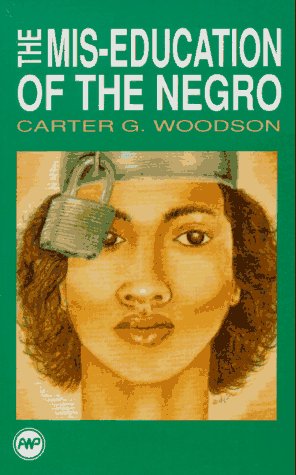
Woodson argued that black people, particularly black youth, need to have a full picture of their history and historical contributions in order to develop the self worth it takes to pursue economic, political and social equality.
“If you teach the Negro that he has achieved as much good as others he will aspire to equality and justice without regard to race. Such an effort would upset the program of the Nordic in Africa and America. The present control of Negroes could not thereafter be maintained. The oppressor, then, must keep the Negro’s mind enslaved by inculcating a distorted conception of history,” Woodson wrote in a New York Age column published August 17, 1935.

Featured Posts
-

Election days, then and now
Looking for something fresh to write about on Election Day, I searched my father’s columns for wisdom from the past. A footnote in a column published in the New York Age on November 3, 1934, implored readers to elect “Mrs. Eunice Carter” to the New York State Assembly. The name had a familiar ring. Five […]
-

‘Was silence not an option?’
My barber called Kamala Harris a “ho.” The shop I go to is not the stuff of Black culture lore. It’s not a boisterous place. It doesn’t reek with toxic masculinity. It’s a nice, quiet, family friendly kind of enterprise. The worst I have been subjected to in the nearly three years I’ve gone there […]
-

Standing on the shoulders of Black Legends
On Saturday, Feb. 17, I will be among several individuals inducted into the 2024 Class of the Black Legends of Silicon Valley. This is quite an honor. Previous recipients in the News and Documentary category in which I am being honored include journalists with stellar credentials. Loretta Green, an award-winning reporter for several local papers […]
-

‘The Donna Collection’
My short story, “The Donna Collection” is included in the new anthology 166 Palms 2020. Buy the anthology on Amazon.
-

Elaine Ray wins 2016 Gival Press Short Story Award
Blown away and humbled. The first piece of fiction I’ve ever gotten published wins an award. The story is published here.

 My Father's Posts