Tag Archives: black history

The Schomburg Center for Research in Black Culture celebrates its centennial

2 Jan

If anyone was interested in surveilling my daily habits, they might surmise that I live in New York. I subscribe to the New York Times and The New Yorker. I get my day started with the “Brian Lehrer Show” on WNYC and usually drink my coffee out of a mug with the radio host’s name. And if there is time, I segue into “All Of It” with Alison Stewart before turning the tuner to my local NPR station, KQED.
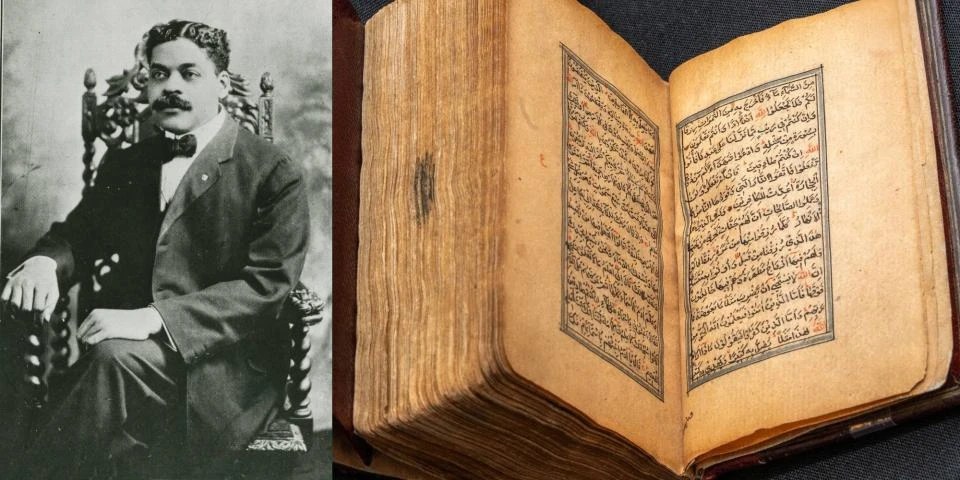
Digital Collection Image ID 1939249 and Jonathan Blanc/New York Public Library

(Don’t get it twisted, I am a die-hard Golden State Warriors fan and have joined the Valkyries bandwagon, but it is hard not to root for the Knicks when they’re not playing the Dubs.)

I live in the San Francisco Bay Area and haven’t had an address in New York since 1987. But even before I moved there in the early 80s I felt the city’s pull. It was a place both of my parents loved. My mother, a native of Newark, New Jersey, shared fond memories of day trips into Manhattan. My father had spent his young adulthood and the bulk of his career as a journalist in Harlem. In my mind, New York has always been a place of wonder.

So, it would be no surprise to anyone that my first act on New Year’s Day was to tune in to the Inauguration festivities for New York Mayor Zohran Mamdani. In line with his Muslim faith, Mamdani swore to uphold the constitution by placing his hand on the Qur’an. Two of the holy books selected for the occasion belonged to his grandparents. The other was from the collection of Arturo Schomburg.

Schomburg was a Black historian born in Puerto Rico. According to Wikipedia, his mother was a freeborn Black woman from St. Croix; his father was of German descent. As a young student, Schomburg recalled an elementary school teacher declaring that Black people had no history. Schomburg, who identified as “Afroborinqueño” or Afro-Puerto Rican, devoted his life to dispelling that lie by documenting the history of the African diaspora.

Schomburg studied commercial printing at San Juan Puerto Rico’s Instituto Popular, and he studied Negro literature at St. Thomas College on the island of St. Thomas. (St. Thomas and St. Croix, where his mother was born, were occupied by the Danish until they were sold, along with St. John, to the United States in 1917.)

At the age of 17, he settled in New York, where his day jobs included teaching Spanish, working as a messenger and clerk for a law firm and eventually supervising the Caribbean and Latin Mail Sections of Bankers Trust. In the meantime, he pursued his passion of doggedly collecting and curating evidence of a rich Black culture and intellectual life from Africa and across the world. He co-founded the Negro Society for Historical Research and was a significant figure in the Harlem Renaissance.

Schomburg sold his collection of art, literature, and historical artifacts to the Harlem branch of the New York Public Library. That collection would become the basis of what is now the Schomburg Center for Research in Black Culture, which currently is celebrating its 100th anniversary.
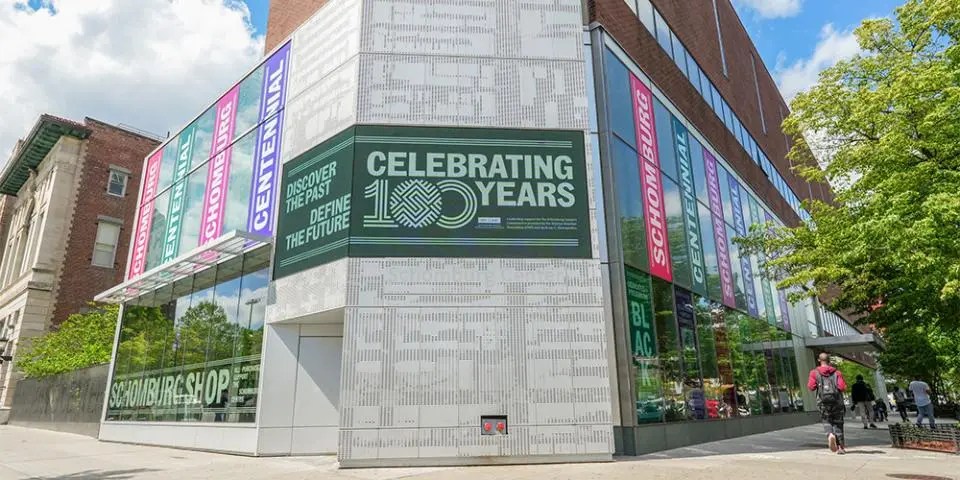
That center is where I discovered the writings of my father, which inspired this website. And I was jazzed when I read that one of the Qur’ans featured in Mamdani’s swearing-in had been loaned to him by the Schomburg.

“The Schomburg Center is honored to have an object from its holdings included in this historic moment for New York City,” Joy Bivins, the Center’s director, said in a Dec. 31 press release.

“As we celebrate 100 years of collecting, preserving, and sharing the riches of global Black culture at this singular institution, we are delighted that Mayor-elect Mamdani selected a Qur’an from our namesake’s personal collection to mark the beginning of his administration.”

“This marks a significant moment in our city’s history, and we are deeply honored that Mayor Mamdani chose to take the oath of office using one of the Library’s Qur’ans,” added Anthony W. Marx, president and CEO of The New York Public Library. “This specific Qur’an, which Arturo Schomburg preserved for the knowledge and enjoyment of all New Yorkers, symbolizes a greater story of inclusion, representation, and civic-mindedness.” 

At a time when the current occupant of the White House has launched a campaign of historical erasure, it is encouraging to see the Schomburg in the spotlight.

‘Was silence not an option?’

26 Oct PG Lucky Design @ Etsy

My barber called Kamala Harris a “ho.”

The shop I go to is not the stuff of Black culture lore. It’s not a boisterous place. It doesn’t reek with toxic masculinity. It’s a nice, quiet, family friendly kind of enterprise.

The worst I have been subjected to in the nearly three years I’ve gone there is being referred to as “Ma’am,” which though appropriate at my age, still takes some getting used to. There’s also “young lady,” which is patronizing, but I shrug that off.

In the five minutes it takes to trim my undercut, I tend to stick to pleasantries: offspring; the Golden State Warriors; vacation plans.

More serious topics, like vaccines, or the evils of pork, come up, but things never get heated.   

On my last visit, though, as we both lamented the number of Black women who have lost jobs since President Donald Trump reentered the White House, it was my barber who quoted the number: More than 300,000. That’s how many Black female workers left the public and private labor force between February and July of this year.

Which made what followed all the more surprising.

Trump is trouble, he said, but if Harris had been elected, “That ho would have taken my guns.”

I reminded him that Harris had insisted during her campaign for president that she is a gun owner.

“She still would have taken my guns,” he said, adding that White men would have been allowed to keep theirs.

“Not if your guns are registered and you pass a background check,” I said.  I didn’t address the fact that he’d referred to Harris with the H word.

I get that not all Black folks love or even like, the former California prosecutor, Senator and Vice President. But that this Black man who has daughters of his own, referred to another Black woman in such vile terms left me speechless.

PG Lucky Design @ Etsy

As a sorority pledge in college, my moniker was the “Little Ivy who hates to talk.”  I’ve been put on the spot in book clubs and other discussion groups with a probing “What do you think, Elaine?” I had a pre-marital therapist who advised me not to edit myself so much. When I accepted a job on the editorial board of the Boston Globe, a coworker said, “I didn’t know you had opinions.”

True, I do operate on the adage that it is better to be silent and thought a fool than to speak and remove all doubt.  I prefer to have my ducks in a row before stating a fact or expressing a point of view.  

I get it honest. I grew up in a household in which my mother and sisters were full of chatter. My father, from whom I inherited my love for journalism and the written word, was a man of very few words. But when he had something to say, it was meaningful. I like to think I take after him. And when someone else says it better, I’m happy to yield my time.

In the aftermath of the assassination of Charlie Kirk, founder of Turning Point USA, who couched his bigotry in a veneer of open debate, several pundits, including Democrats and liberals, tripped over themselves to hail Kirk’s commitment to “open dialogue.” 

Journalist and author Ta-Nehisi Coates challenged the echo chamber of gushing postmortems in a piece in Vanity Fair:

“By ignoring the rhetoric and actions of the Turning Point USA founder, pundits and politicians are sanitizing his legacy,” the intro to Coates’ article read. The essay, titled “Charlie Kirk, Redeemed: A Political Class Finds Its Lost Cause,” included a litany of Kirk’s racist, transphobic, Islamophobic, and antisemitic provocations.

Ezra Klein, New York Times columnist, author and podcaster, and one of the apologists Coates had singled out, responded: “Coates compared what I was doing there to the whitewashing of the Southern cause after the Civil War.”

So as pundits with platforms do these days, he invited Coates to join him on his podcast, the Ezra Klein Show.

“One thing for me is that in the immediate hours after somebody is murdered in public, when you see that sort of grief and horror pouring out of the people who loved him — and many people loved him — my instinct then is to just sit with them in their grief,” Klein offered in his defense.

“To say: ‘I can for this moment find some way to grieve with you, to see your friend in some version of the way you saw him.’  That’s not my view of the person’s whole legacy, but going to people when they’re grieving like that and saying: ‘Listen, I want to tell you what I really thought of your friend’ — just feels like not what you do in a community.”

“Was silence not an option?” Coates asked.

As a person of few words, that question resonated with me. In this age of the defunding public radio, the extortion of corporate media and the shameful acquiescence of social media moguls, is silence ever an option?

The most appropriate response to Charlie Kirk’s hateful speech was more speech. I certainly understand Klein’s impulse as a journalist to say something about the horror of such a public assassination, while not speaking ill of the dead.

I also believe that Coates’ essay was the appropriate response to the whitewashing of Kirk’s bigotry.

***

Back at the barbershop. I walked out of the shop before I could fully collect my thoughts.

I texted a friend. “My barber just called Kamala a ‘ho.’ Now, I’m gonna have to find someone else to cut my hair.”

That’s a challenge. A previous barber had pontificated on the Jeffrey Dahmer case: “If you are going to be gay, don’t be gay with White people,” as if Dahmer’s Black victims somehow deserved their gruesome fates. I don’t remember how we ended up on that subject, but I couldn’t get out of that chair fast enough.

I’ve thought about going back to my barber and simply telling him that he offended me. “Young man,” I could ask, “What gave you the impression that you could look at me and show that kind of disrespect toward another Black woman?”  

Or is silence the best option?

Sometimes it is, usually it’s not.

Did my barber have a right to call Vice President Harris out of her name?

Sure. But I have a right to not let him touch my hair.

Eerie Echos of ‘Democracy Losing’

25 Oct People and Things November 14, 1942

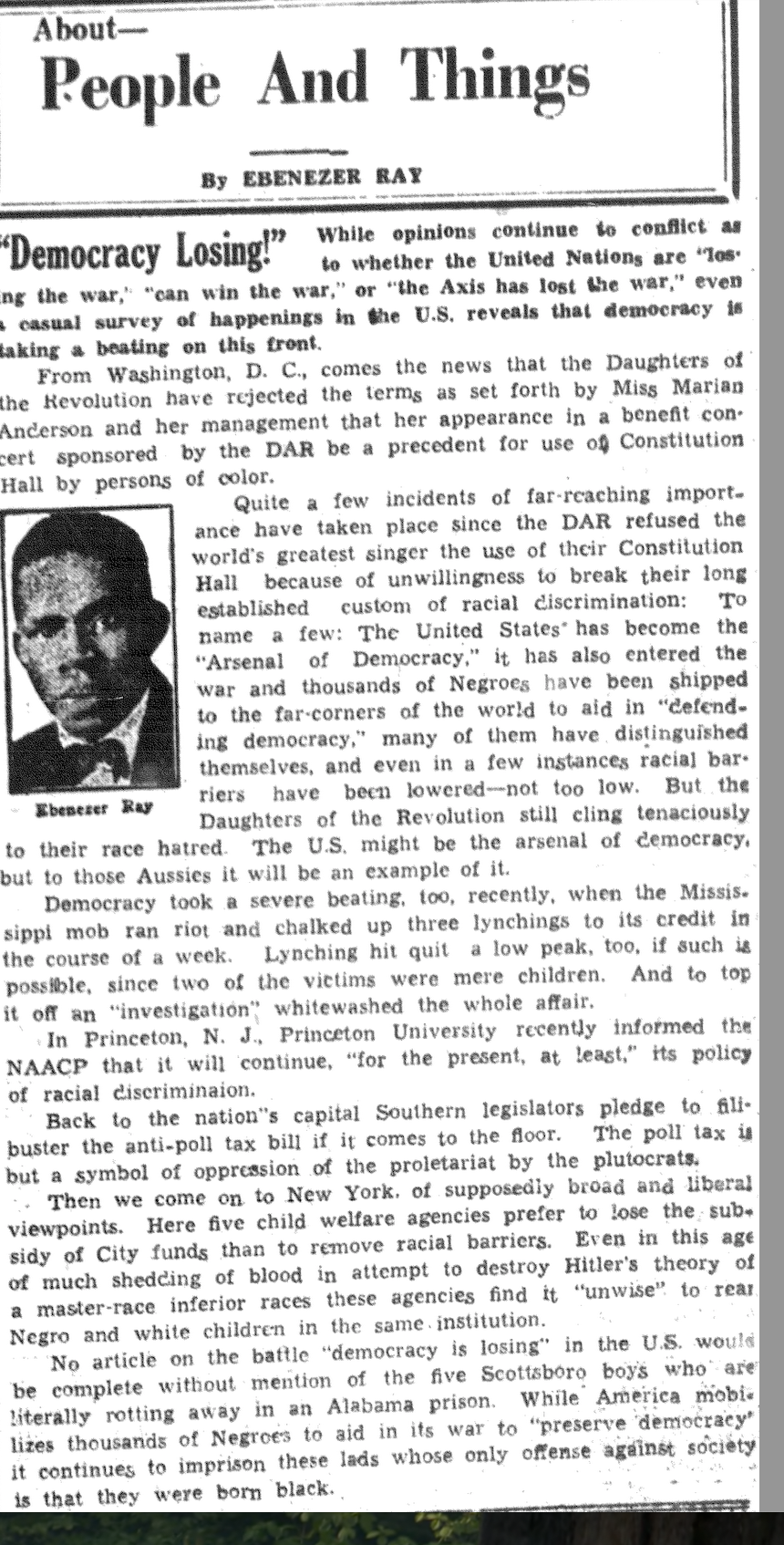
Eighty-three years ago, my father wrote a column titled “Democracy Losing!” asserting that while Americans were debating whether the world was winning or losing the war against the Nazis, “a casual survey of happenings in the U.S. reveals that democracy is taking a beating on this front.”

In November of 1942, Ebenezer lamented that the Daughters of the American Revolution (DAR), were still balking at the terms “set forth by, Miss Marian Anderson, and her management that her appearance in a benefit concert sponsored by the DAR be precedent for use of Constitution Hall by persons of color.”

My father loved Marian Anderson, so it is no surprise that three years after her historic 1939 Easter concert at the Lincoln Memorial  —  an alternative venue arranged with the help of First Lady Eleanor Roosevelt after the DAR refused to abandon its whites-only policy — Ebenezer was still outraged.

But that was not the only bee in his bonnet.

“Quite a few incidents of far-reaching importance have taken place since the DAR refused the world’s greatest singer the use of the Hall because of unwillingness to break their long-established custom of racial discrimination.”

My father pointed to three lynchings in Mississippi  — two of the victims were children — and that an ‘”investigation’ whitewashed the whole affair.”

He also mentioned that Princeton University had informed the NAACP that it would continue ”’for the present at least,’ its policy of discrimination.”

There also was the pledge by Southerners in Congress to filibuster an anti poll-tax bill. “The poll tax is but a symbol of oppression of the proletariat by the plutocrats.”

“Then we come to New York,” he added. “Here five child welfare agencies prefer to lose the subsidy of City funds than to remove racial barriers. Even in this age of much shedding of blood in attempt to destroy Hitler’s theory of a master race, these agencies find it ‘unwise’ to rear Negro and white children in the same institution.”

Several months after this column, in 1943, the DAR agreed to allow Marian Anderson to perform for a racially integrated audience in their venue.

I have not been able to pinpoint my father’s NAACP/Princeton University reference,. However, according to April Armstrong, author of “Erased Pasts and Altered Legacies: Princeton’s First African American Students,” the first African American to receive an A.B. from Princeton University was John Leroy Howard in 1947. (At least two other Black men had received graduate degrees in 1891 and 1893. Bruce Wright, a future member of the New York Supreme Court, was accepted into Princeton as an undergraduate in the mid-1930s, but his admission was revoked when he showed up on campus and administrators realized he was Black.)

While there has been significant progress since my father wrote this column 83 years ago, “Democracy Losing” is certainly a concept that is currently trending. With President Donald Trump’s takeover of the Kennedy Center for the Performing Arts; Republican efforts to put the final nail in the coffin of the Voting Rights Act; the assault on universities, particularly their commitment to Diversity, Equity and Inclusion; and the violent attacks on people perceived to be undocumented immigrants by Immigration and Customs Enforcement agents based on their race, has eery echoes of the past.

People and Things November 14, 1942

Harriet Tubman at the Crossing

18 Mar

Artist Cheryl Derricotte created an eight-foot, larger-than-life likeness of Harriett Tubman, who was five-feet tall. The project was a collaboration of the the City of Milbrae, San Mateo County NAACP, BART, and Republic Urban Properties.

On Thursday morning, I heard an announcement on KQED, my local pubic radio station, that there would be a dedication of a monument to Harriet Tubman at the Milbrae, Calif. train station.

“That’s interesting,” I thought, as I hustled to get dressed and out the door to make it to the unveiling, which was taking place in a couple of hours. Milbrae is a Bay Area town just south of San Francisco with a Black population of 0.5 percent. I’ve always regarded it as a pass-through place where I park to take the Bay Area Rapid Transit (BART) train into San Francisco or San Francisco International Airport. Or it’s where I switch from the Caltrain to the BART train to go to Oakland or Berkeley. Interesting that the town would honor Tubman with a permanent monument.

And that, it turns out, is the point.

In February, in recognition of Black History Month, a street at the BART station was renamed Harriet Tubman Way.

The monument, created by Cheryl Derricotte and titled “Freedom’s Threshold,” is a 12-foot aluminum A-frame “house,” featuring an eight-foot-tall image of Tubman printed on powdered-glass tiles.

Derricotte explains that in addition to Tubman’s many heroics, from freeing countless enslaved people via the Underground Railroad, serving as a scout and spy for the Union Army during the Civil War, and being active in the woman’s suffragist movement, Tubman was a property owner, rare in her day. The sculpture represents Tubman in her home.

Of course, Tubman is not only a hero for Black America. She is a hero for all of America. So the demographics of the city of Milbrae are irrelevant. Millions of travelers from all over the world make connections at that station. Placing the monument at the intersection of real trains is a perfect metaphor.

Living History

5 Apr

In the months leading up to a tour titled “On the Road to Freedom: Understanding the Civil Rights Movement,” I was on the fence. Despite the waning Covid infection numbers, the easing of mask mandates and the fact that my fellow travelers would all be fully vaccinated and boostered, I wasn’t sure. After all, we were traveling by bus through Alabama, Arkansas, Mississippi and Tennessee, states with lower vaccination rates than California. I’d managed to dodge the Covid bullet for two years. Was I ready to let my guard down?

I like to think of myself as an intrepid traveler, but the thought of navigating airports and ground transportation, all in an N 95 mask, gave me pause. Still, I was intrigued by the idea of a trip to U.S. historical sites I’d only read about.

In the end, I decided to go for it. After all, I told myself, you’re not getting any younger.

What occurred to me once the trip began, was that the people we would meet, foot soldiers who had been on the front lines of the movement, weren’t getting any younger either. As I note in my op-ed, “What Happens to Rage Repressed?” published in The Boston Globe on April 1, I got to meet Elizabeth Eckford, one of the Little Rock Nine. But she was just one of the treasures who shared their time and wisdom with us.

Elizabeth Eckford

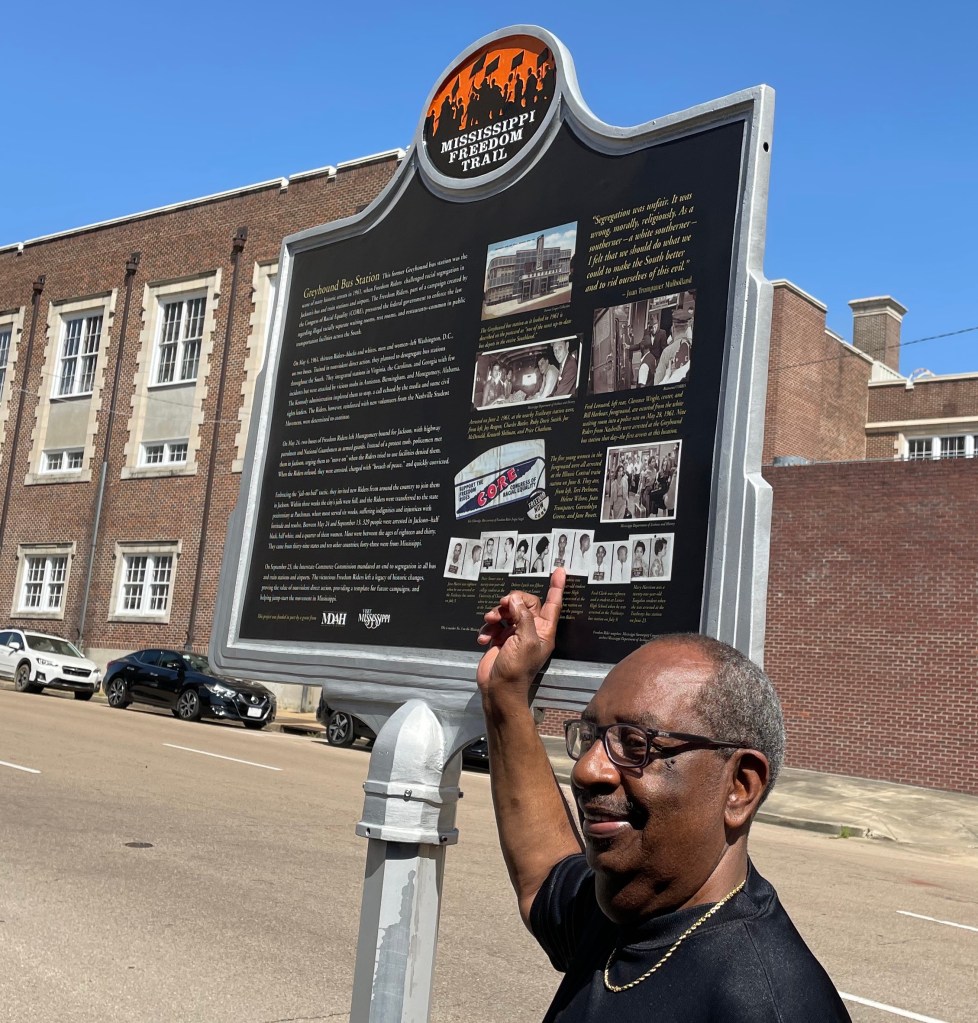
There was Hezekiah Watkins, who describes himself as Mississippi’s youngest Freedom Rider. His first arrest and incarceration at 13 years old is a harrowing tale.

Hezekiah Watkins

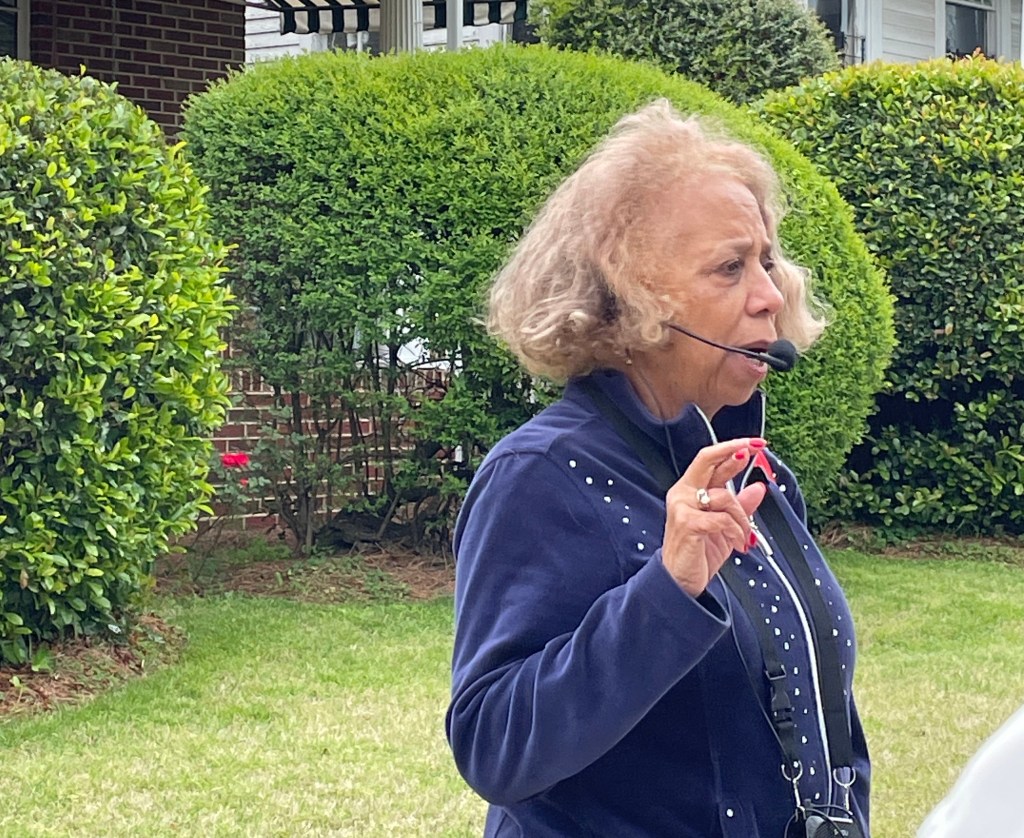
We spent several hours with Rev. Carolyn McKinstry as she recounted how at 15 years old she was handling Sunday School paperwork at 16th Street Baptist Church in Birmingham, Alabama, when the Ku Klux Klan set off the blast that killed four of her friends, injured others and terrorized the Black community.

Rev. Carolyn McKinstry

We visited the Montgomery, Alabama, home of Dr. Valda Harris Montgomery, which was down the block from the parsonage of Dexter Avenue Baptist Church, where Rev. Dr. Martin Luther King, Jr. served as pastor from 1954 to 1960. Dr. Harris told heartwarming stories of the two families socializing in each other’s homes and how her own home was a sanctuary and a strategizing space for civil rights activists.

Dr. Valda Harris Montgomery

The tour, sponsored by the Commonwealth Club of California, included time to take in good music and enjoy delicious food. The state-of-the-art interactive museums that document the history of the African diaspora alone were worth the trip. Still, it was the living monuments to this history that I will remember the most.