Tag Archives: new york

The Schomburg Center for Research in Black Culture celebrates its centennial

2 Jan

If anyone was interested in surveilling my daily habits, they might surmise that I live in New York. I subscribe to the New York Times and The New Yorker. I get my day started with the “Brian Lehrer Show” on WNYC and usually drink my coffee out of a mug with the radio host’s name. And if there is time, I segue into “All Of It” with Alison Stewart before turning the tuner to my local NPR station, KQED.
Digital Collection Image ID 1939249 and Jonathan Blanc/New York Public Library

(Don’t get it twisted, I am a die-hard Golden State Warriors fan and have joined the Valkyries bandwagon, but it is hard not to root for the Knicks when they’re not playing the Dubs.)

I live in the San Francisco Bay Area and haven’t had an address in New York since 1987. But even before I moved there in the early 80s I felt the city’s pull. It was a place both of my parents loved. My mother, a native of Newark, New Jersey, shared fond memories of day trips into Manhattan. My father had spent his young adulthood and the bulk of his career as a journalist in Harlem. In my mind, New York has always been a place of wonder.

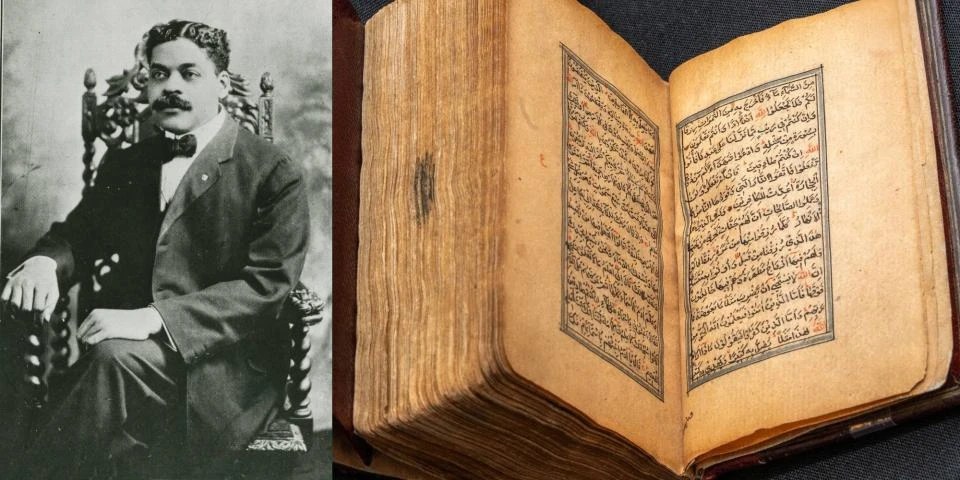
So, it would be no surprise to anyone that my first act on New Year’s Day was to tune in to the Inauguration festivities for New York Mayor Zohran Mamdani. In line with his Muslim faith, Mamdani swore to uphold the constitution by placing his hand on the Qur’an. Two of the holy books selected for the occasion belonged to his grandparents. The other was from the collection of Arturo Schomburg.

Schomburg was a Black historian born in Puerto Rico. According to Wikipedia, his mother was a freeborn Black woman from St. Croix; his father was of German descent. As a young student, Schomburg recalled an elementary school teacher declaring that Black people had no history. Schomburg, who identified as “Afroborinqueño” or Afro-Puerto Rican, devoted his life to dispelling that lie by documenting the history of the African diaspora.

Schomburg studied commercial printing at San Juan Puerto Rico’s Instituto Popular, and he studied Negro literature at St. Thomas College on the island of St. Thomas. (St. Thomas and St. Croix, where his mother was born, were occupied by the Danish until they were sold, along with St. John, to the United States in 1917.)

At the age of 17, he settled in New York, where his day jobs included teaching Spanish, working as a messenger and clerk for a law firm and eventually supervising the Caribbean and Latin Mail Sections of Bankers Trust. In the meantime, he pursued his passion of doggedly collecting and curating evidence of a rich Black culture and intellectual life from Africa and across the world. He co-founded the Negro Society for Historical Research and was a significant figure in the Harlem Renaissance.

Schomburg sold his collection of art, literature, and historical artifacts to the Harlem branch of the New York Public Library. That collection would become the basis of what is now the Schomburg Center for Research in Black Culture, which currently is celebrating its 100th anniversary.
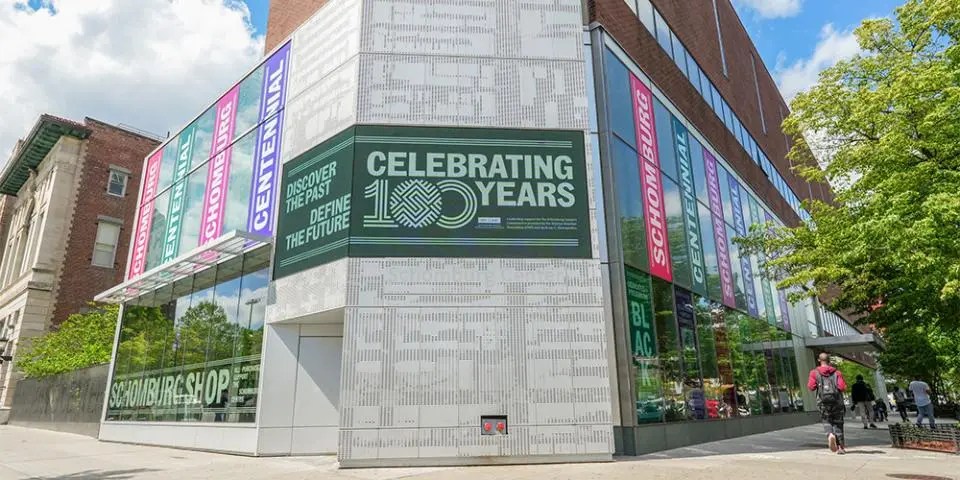
That center is where I discovered the writings of my father, which inspired this website. And I was jazzed when I read that one of the Qur’ans featured in Mamdani’s swearing-in had been loaned to him by the Schomburg.

“The Schomburg Center is honored to have an object from its holdings included in this historic moment for New York City,” Joy Bivins, the Center’s director, said in a Dec. 31 press release.

“As we celebrate 100 years of collecting, preserving, and sharing the riches of global Black culture at this singular institution, we are delighted that Mayor-elect Mamdani selected a Qur’an from our namesake’s personal collection to mark the beginning of his administration.”

“This marks a significant moment in our city’s history, and we are deeply honored that Mayor Mamdani chose to take the oath of office using one of the Library’s Qur’ans,” added Anthony W. Marx, president and CEO of The New York Public Library. “This specific Qur’an, which Arturo Schomburg preserved for the knowledge and enjoyment of all New Yorkers, symbolizes a greater story of inclusion, representation, and civic-mindedness.” 

At a time when the current occupant of the White House has launched a campaign of historical erasure, it is encouraging to see the Schomburg in the spotlight.

Elections: Facing Forward

5 Nov

Yesterday, I wrote about a thirty-something New Yorker with little political experience who ran for a seat on the New York State Assembly. Her name was Eunice Hunton Carter, and her 1934 campaign was ultimately unsuccessful.

Today, Zohran Mamdani, already a member of the New York State Assembly from Queens, is New York City’s Mayor Elect. And in addition to his success, Democratic candidates across the country won decisive victories. 

In the governors’ races in New Jersey and Virginia, both women candidates, Mikie Sherrill and Abigail Spanberger were more moderate than Mamdani, who unapologetically identifies as a democratic socialist. He has promised to make New York more affordable by freezing the rent on rent-stabilized apartments, by providing universal child care, and by making buses free. 

In his book, Invisible, Stephen L. Carter’s biography of his grandmother Eunice, he describes her 1934 election platform as “long on promises and short on the practical means for attaining them.”  She pledged to ease qualifications for old-age pensions in the days before Social Security existed. She wanted to lower electric, gas and telephone rates and improve unemployment insurance. 

“Familiar goals all,” Stephen Carter wrote, “yet Eunice was able to make people believe she could pull them off.” 

I lived in New York for a brief six years, and left the city decades ago, but it continues to have a hold on me, as I believe it had on my father, even after he made Pittsburgh his home. 

So, I, like Eunice’s supporters, was electrified by Mamdani’s campaign even from 3,000 miles away. And I am hopeful that as Mayor he has the practical skills and the talented administration necessary to attain at least some of his goals.

The swath of Tuesday’s election outcomes suggests that the Democratic Party is not one-size-fits-all and that it should continue to embrace a wide tent. May the momentum of these victories and the coalitions that made them possible help smooth even the rockiest political roads ahead. 

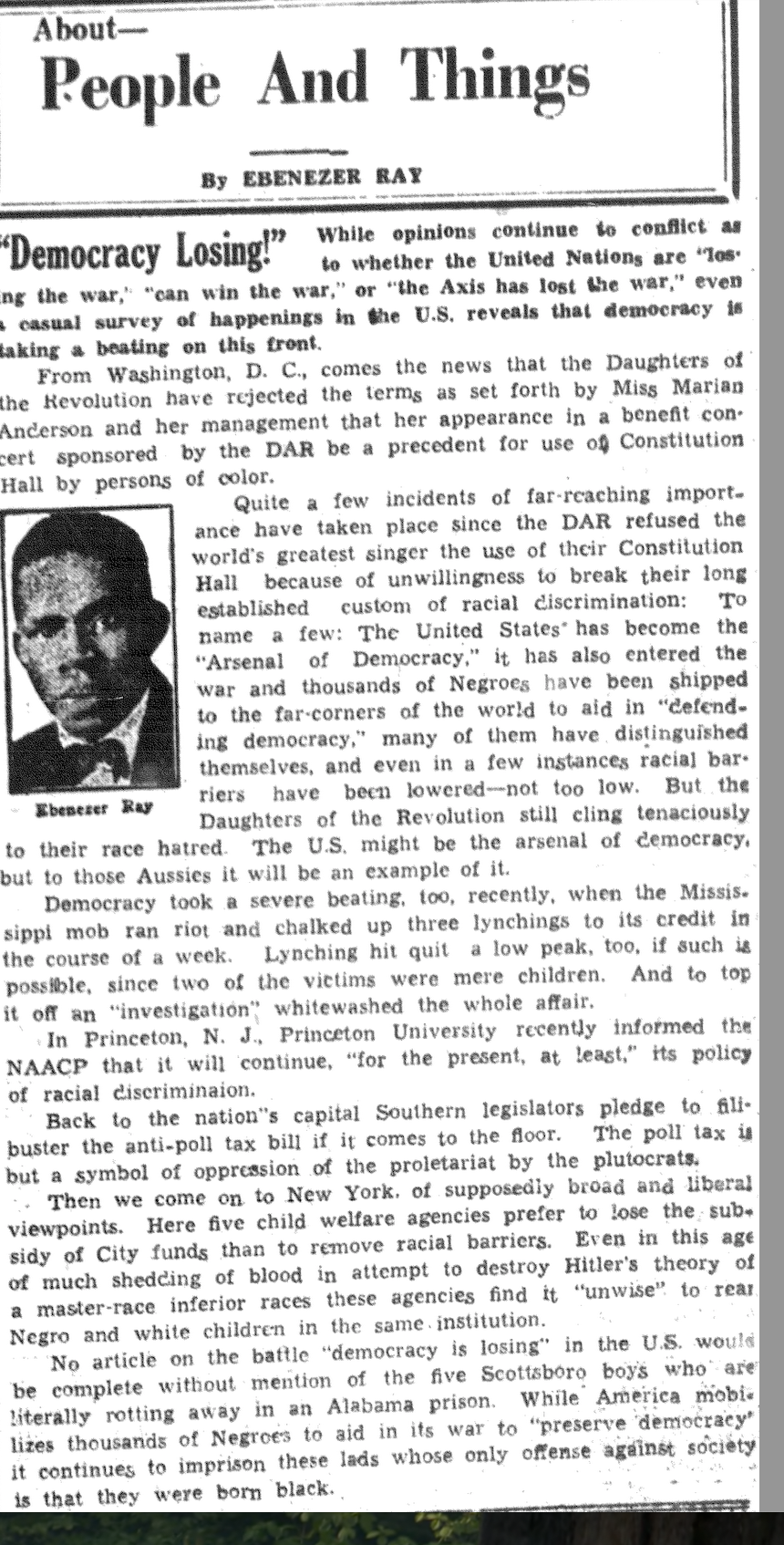
Eerie Echos of ‘Democracy Losing’

25 Oct People and Things November 14, 1942

Eighty-three years ago, my father wrote a column titled “Democracy Losing!” asserting that while Americans were debating whether the world was winning or losing the war against the Nazis, “a casual survey of happenings in the U.S. reveals that democracy is taking a beating on this front.”

In November of 1942, Ebenezer lamented that the Daughters of the American Revolution (DAR), were still balking at the terms “set forth by, Miss Marian Anderson, and her management that her appearance in a benefit concert sponsored by the DAR be precedent for use of Constitution Hall by persons of color.”

My father loved Marian Anderson, so it is no surprise that three years after her historic 1939 Easter concert at the Lincoln Memorial  —  an alternative venue arranged with the help of First Lady Eleanor Roosevelt after the DAR refused to abandon its whites-only policy — Ebenezer was still outraged.

But that was not the only bee in his bonnet.

“Quite a few incidents of far-reaching importance have taken place since the DAR refused the world’s greatest singer the use of the Hall because of unwillingness to break their long-established custom of racial discrimination.”

My father pointed to three lynchings in Mississippi  — two of the victims were children — and that an ‘”investigation’ whitewashed the whole affair.”

He also mentioned that Princeton University had informed the NAACP that it would continue ”’for the present at least,’ its policy of discrimination.”

There also was the pledge by Southerners in Congress to filibuster an anti poll-tax bill. “The poll tax is but a symbol of oppression of the proletariat by the plutocrats.”

“Then we come to New York,” he added. “Here five child welfare agencies prefer to lose the subsidy of City funds than to remove racial barriers. Even in this age of much shedding of blood in attempt to destroy Hitler’s theory of a master race, these agencies find it ‘unwise’ to rear Negro and white children in the same institution.”

Several months after this column, in 1943, the DAR agreed to allow Marian Anderson to perform for a racially integrated audience in their venue.

I have not been able to pinpoint my father’s NAACP/Princeton University reference,. However, according to April Armstrong, author of “Erased Pasts and Altered Legacies: Princeton’s First African American Students,” the first African American to receive an A.B. from Princeton University was John Leroy Howard in 1947. (At least two other Black men had received graduate degrees in 1891 and 1893. Bruce Wright, a future member of the New York Supreme Court, was accepted into Princeton as an undergraduate in the mid-1930s, but his admission was revoked when he showed up on campus and administrators realized he was Black.)

While there has been significant progress since my father wrote this column 83 years ago, “Democracy Losing” is certainly a concept that is currently trending. With President Donald Trump’s takeover of the Kennedy Center for the Performing Arts; Republican efforts to put the final nail in the coffin of the Voting Rights Act; the assault on universities, particularly their commitment to Diversity, Equity and Inclusion; and the violent attacks on people perceived to be undocumented immigrants by Immigration and Customs Enforcement agents based on their race, has eery echoes of the past.

People and Things November 14, 1942

Dottings on a presidential reelection: Hate me if you dare

11 Nov

I’m re-posting an entry I originally published in February of 2011, which seems like ages ago. Last Tuesday, We The People overcame voter suppression campaigns, lies, bungled debates and obscene amounts of campaign spending to reelect President Barack Obama and to put down efforts to make him a one-term president. Now that the Florida vote has been counted, I thought I would add this year’s final electoral map.

The New New Deal, 2008, Photo illustration by Arthur Hochstein and Lon Tweeten. ( F.D.R. photo by Associated Press. Obama photo by John Gress, Reuters.)

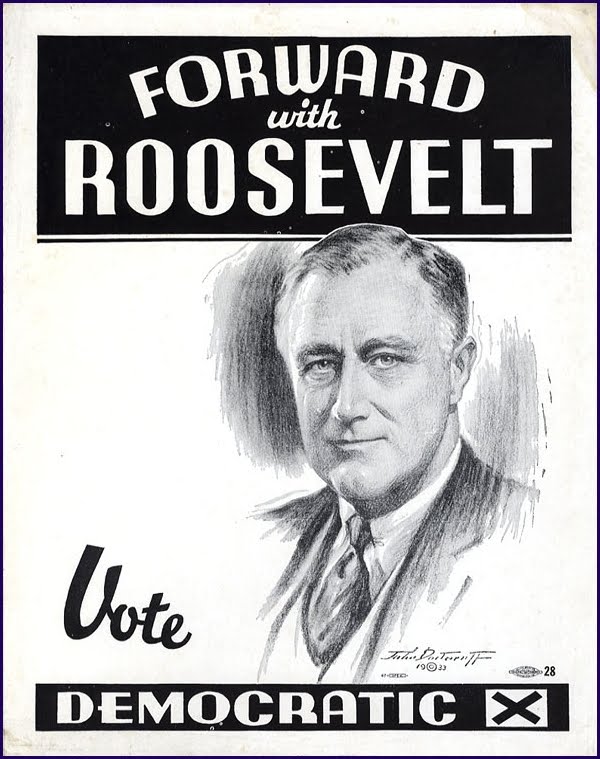
“Never before have these forces been so united against one candidate as they stand today. They are unanimous in their hate for me—and I welcome their hatred,” Franklin Delano Roosevelt said of Republicans during his reelection campaign in 1936.
Sound familiar? I wish.
Perhaps President Obama will take a page from FDR as he gears up for the 2012 campaign.
After all, these fightin’ words turned out to be winning words for FDR.
In honor of Presidents’ Day, I offer a column published by my father, Ebenezer Ray, on Nov. 14, 1936, shortly after the shellacking Roosevelt doled out to his opponent, Gov. Alf Landon of Kansas,  in 1936. Prior to the election, my father had written columns endorsing Roosevelt. But his support was not a given.  His employer, The New York Age, was a traditional supporter of the Republican Party.  The paper opposed the Democratic Party nationally because of its tolerance  of southern segregation.

FDR’s 1936 landslide.    Credit: 270toWin

Referring to himself in typical self-deprecating fashion, Ebenezer wrote: “This newcomer and political dunce failed to be convinced (1) that President Roosevelt was not the fit and proper person to guide the destiny of this country for the next four years and (2) that the Republican candidate was the better man.
. . . With his avalanche of votes in favor of the New Deal went the Negro vote, local and national, despite the fact that President Roosevelt represents the Party which disenfranchises the Negro in the South. Wherefore the Negro vote?
According to the man in the street, in the barbershop, in the restaurant and other proletariat among whom this writer moves, prosperity is the paramount issue. Up to 1929, they contend there was discrimination in the South, but we also had prosperity. Since 1929, and especially during the last Republican regime, there was still discrimination in the South but NO prosperity. In President Roosevelt is seen the capability of bringing prosperity from around  that elusive corner, made popular by Mr. Hoover.”
To illustrate his community’s support of the New Deal, Ebenezer described the changing atmosphere in the bank at the corner of 135th Street and Seventh Ave.
“In these premises, until president Roosevelt’s bank holiday, was situated the unlamented Chelsea Bank.  During its declining months one could easily race a bull about the premises without harming a depositor.  Nowadays, occupied by the Dunbar National Bank, during business hours the premises resemble a market rather than a bank. Of great concern to the poor man is the knowledge that whatever part of his earnings he is privileged to save is SAFE.
The great majority has reelected Roosevelt. ‘The voice of the people is the voice of God,'” Ebenezer concluded.
Robert Reich, former secretary of labor in the Clinton Administration, who is now a professor of public policy at the University of California at Berkeley, wrote a column before the midterm election last fall, titled “Why Obama should learn the lesson of 1936, not 1996,” In it, Reich said: “The relevant political lesson isn’t Bill Clinton in 1996, but Franklin Delano Roosevelt in 1936.”

Library of Congress

Reich continued:”By the election of 1936 the Great Depression was entering its eighth year. Roosevelt had already been president for four of them. Yet he won the biggest electoral victory since the start of the two-party system in the 1850s.” Reich wrote that while the key to Clinton’s victory was a booming economy, the key to Roosevelt’s was setting himself apart from the greed of the Republicans and their financiers and standing up for and with everyday people.

Back to Ebenezer’s column: At the end he offers a brief review of the theater adaptation of Sinclair Lewis’ novel It Can’t Happen Here, about a Hitler type character who attempts to dominate the United States:
“The capacity crowd which attended the Adelphi Theatre on West 54th Street Thursday evening last . . . is better testimony to the entertainment value of It Can’t Happen Here than any reviewer can write. For, after all, ‘It is the guest who is the judge of the meat,'” Ebenezer wrote.

Accepting democracy in theory, while nullifying it in practice

3 Sep


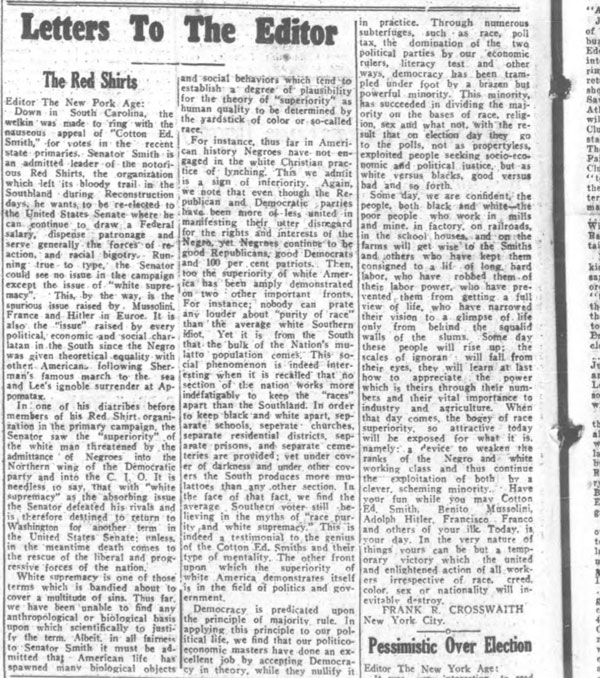
“Democracy is predicated upon the principle of majority rule. In applying this principle to our political life, we find that our politico-economic masters have done an excellent job by accepting Democracy in theory, while they nullify it in practice. Through numerous subterfuges, such as race, poll tax, the domination of the two political parties by our economic rulers, literacy tests and other ways, democracy has been trampled under foot by a brazen but powerful minority. This minority has succeeded in dividing the majority on the bases of race, religion, sex, and what not, with the result that on election day they go to the polls, not as propertyless, exploited people seeking socioeconomic and political justice, but as white vs. blacks, good vs. bad, and so forth,” Frank Crosswaith, letter to the editor, the New York Age, Oct. 8, 1938.

One of the added delights of this research into my father’s writings is stumbling upon the voices of his colleagues and contemporaries.  For weeks, I have been looking for something that might have some historical resonance to the voter suppression activities that are taking place in 2012. I also was looking for something that might be appropriate for Labor Day.

I found a twofer, not among my father’s columns, but in a letter to the editor that ran in his paper written by Frank Crosswaith (1892-1965), a New York labor leader.  Born in what is now the U. S. Virgin Islands, Crosswaith came to New York at the age of 13 and devoted his life to improving labor conditions for workers, particularly those in Harlem.  A biography on the New York Public Library’s website describes him as “one of the most effective organizers of black workers in New York City,” during the 20s and 30s.

Though Crosswaith was based in Harlem and worked closely with unions that had significant numbers of blacks among their ranks, he also embraced and championed the cause of the white working class. He ran as the Socialist candidate for several statewide offices and although his election bids were unsuccessful, he drew strong multiracial support.

Periodically, Crosswaith and my father gave one another a nod in print. Crosswaith wrote a letter praising one of my father’s columns, which Ebenezer then printed in his Dottings space on Jan. 1, 1938. My father once singled out Crosswaith as one of the few orators who took spoke on the streets of Harlem who were worth listening to and would not massacre “the King’s English.”

In that Oct. 8 letter to the editor in the New York Age, Crosswaith singled out Sen. Ellison “Cotton Ed” Smith (D-South Carolina). According to Wikipedia, Smith earned his nickname while serving in the House of Representatives when he said: “Cotton is king and white is supreme.”  Smith opposed women’s suffrage, arguing that it would apply the same rights as the 15th Amendment had granted to “the other half of the Negro race.”

During the 1938 Democratic Convention, Smith walked out when he saw that a black man was going to offer the invocation.

“Some day,” Crosswaith wrote,  “we are confident the people both black and white — the poor people who work in the mills and mine, in factory, on railroads in the school houses and on the farms will get wise to the Smiths and others who have kept them consigned to a life of long hard labor, who have robbed them of their labor power, who have prevented them from getting a full view of life, who have narrowed their vision to a glimpse of life only from behind the squalid walls of the slums. Some day these people will rise up; the scales of ignorance will fall from their eyes, they will learn at last to appreciate the power which is theirs through their numbers and their vital importance to industry and agriculture. And when that day comes, the bogey of race superiority, so attractive today, will be exposed for what it is: namely a device to weaken the ranks of the Negro and the white working class and thus continue the exploitation by a clever, scheming minority. “

To Cotton Ed Smith and “others of his ilk” Crosswaith had this message:

“Have your fun while you may . . .  Today is your day. In the very nature of things yours can be but a temporary victory which the united and enlightened action of all workers irrespective of race, creed, color, sex or nationality will inevitably destroy.“