
Archive by Author

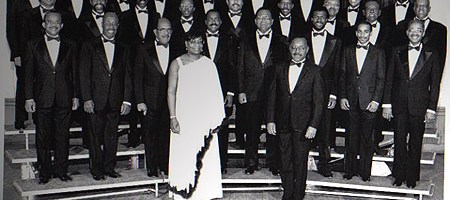
Julian Marshall Williams, pioneering journalist, scholar

16 Jul

My cousin Julian and I had just begun to get reacquainted. We hadn’t seen each other in more than a decade, but we were new Facebook friends, fellow bloggers and journalists.

“I need your advice on something,” Julian wrote in an email last spring. “What do you think of my creating a blog designed to post news about our wonderful aunts, uncles, cousins, etc.? There is so much talent in our family, and we are doing so many great things.”

In another, he wrote to say that he liked this blog. “I am so proud of you, my dear cousin! Keep up the good work.”

“It’s so great to reconnect with you,” I wrote back. “When Zuri gets back to Atlanta, we’ll have to meet somewhere, maybe Savannah.”

Tragically, Julian is being laid to rest in Savannah today. His sudden death on July 6 at a young 58 makes no sense to me. Frankly, it makes me mad. Continue reading

That ‘threshold’ business

4 Jul

“So we married,” my father wrote in his column a couple of weeks after he said, “I do’ to Lucille Manning, his first wife. In an April 29,1939 New York Age article describing the wedding, there was not a hint of sarcasm. But even as a newlywed, Ebenezer could not resist.

“Irrespective of what one hears and knows, yet something gets by you,” he wrote in his column on May 6, 1939. “We hadn’t heard of this ‘carrying your bride over the threshold’ business until very recently. What strikes us is, suppose we had married that hell-cat with plenty of pois — avoirdupois. ‘What strength can’t do art and resolution will,’ they tell us. Art would have failed. Resolution would have gotten us a piano-mover.
“We carried our 120 pounds over. She smiled broadly. We grinned. Who said a man isn’t born a chump?”

I’m sure we will never know who the “hell-cat” was. I trust Lucille appreciated his sense of humor.

Continue reading

Lucille Manning Ray: A wife from another life

30 Jun
Newspaperman Marries Beautician

The New York Age, April 29, 1939

About a decade before my parents tied the knot, another woman took the name of Mrs. Ebenezer Ray.  Her name was Lucille. For a long time, that’s all I knew. My mother had told me my father had had a first wife. And after my mom  died, I found my dad and Lucille’s divorce papers in my mother’s dresser drawer. When I told a friend that I’d thought  it curious that my mother would save  the divorce papers from her husband’s first marriage, but none of his writings, the friend suggested that it was by design. My mother wanted to make sure my father was free to marry. Knowing my mother, that is exactly what she was thinking. But knowing my mother, if she’d  had copies of his columns, she would have kept those too. Continue reading

James Browne’s weekend love

17 Jun

It’s the late 60s, and I’m in the backyard of our Pittsburgh home. My mother’s brothers, James and John, and their brother-in-law Frank are back there too.  We’re busying ourselves with summer chores my mother has assigned. But Uncle John and Uncle Frank aren’t having it.  After all, none of this was their idea. One minute they were out carousing somewhere between Newark and the Bronx. The next thing they knew they were on the Pennsylvania Turnpike headed for Pittsburgh, my Uncle James behind the wheel. Continue reading

The Claude Neal lynching

5 Jun

In The Warmth of Other Suns, Isabel Wilkerson‘s hard-to-put-down chronicle of the Great Migration,  she describes the lynching of Claude Neal in Marianna, Florida in 1934.

It is  a gruesome tale of unspeakable acts, including the mutilation, hanging, rehanging, dragging and shooting of one  man.

And though we can only hope that this orgy of gratuitous hate and voyeurism was what Wilkerson says was “perhaps the single worst act of torture and execution in twentieth-century America,”  we know it was illustrative of the reign of terror, humiliation and intimidation that prevailed in the American South well into the 1960s.

“Across the country, thousands of outraged Americans wrote to President Franklin D. Roosevelt demanding a federal investigation,” Wilkerson writes. “The NAACP compiled a  sixteen-page report and more files on the Neal case than any other lynching in American history. But Neal had the additional misfortune of having been lynched just before the 1934 national midterm elections, which were being seen as a referendum on the New Deal itself. Roosevelt chose not to risk alienating the South with a Democratic majority in Congress at stake. He did not intervene in the case. No one was ever charged in Neal’s death or spent a day in jail for it,” Wilkerson adds. Continue reading